

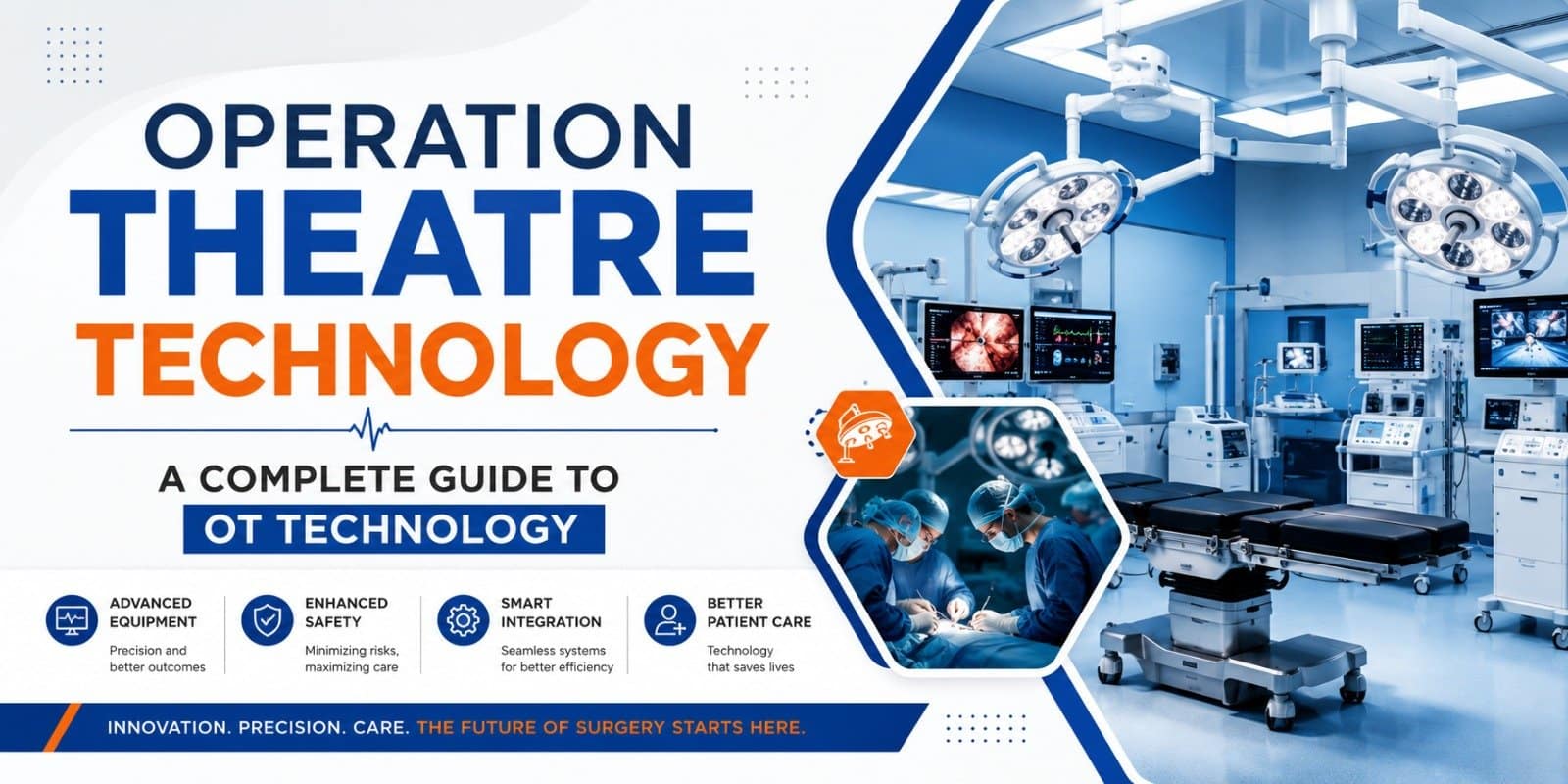
One such important branch of allied healthcare sciences is operation theatre technology (OTT). The focus area of the course includes preparation and management of operation theatre, assistance to the surgeons at the time of surgery as well as special gadgets, patient safety before, during or after surgery. With the continuous advancements in surgical technology being embraced by healthcare facilities, India and abroad are increasing their need for skilled Operation Theatre Technologists.
Every good team working in the surgical theatre relies on the skills and expertise of skilled operation theatre technologists, also called OT technicians. Surgeons, anesthesiologists, nurses, and other healthcare workers work closely together to ensure every procedure is as safe and efficient as possible. They expertly handle sterilisation, surgical instruments, patient monitoring and infection control which go a long way to ensure the success of any surgery performed.
An aspiring healthcare student or an individual who wants to know about the profession before examining it better, this full-filling guide covers all that you are looking for regarding Operation Theatre Technology such as responsibilities, education, skills needed, course details for pursuing a career in OT technology domain which is also called surgical technology along with career opportunities for jobs after 12th/diploma degree with job salary and future scope & PP perspective.
What is Operation Theatre Technology?
Operation Theatre Technology is a flagship health care program, which helps in qualifying professionals who manage operation theatres and play an important role as an assistant to medical teams during surgical procedures. The discipline is a mixture of medical knowledge, technical skills, and practical science to facilitate intervention during surgery.
To briefly describe, an Operation Theatre Technologist prepares the operating room, helps sterilise instruments and arranges equipment while monitoring patients and the behaviour of a surgeon during the procedure.
Instrument Operation Theatre Technology: The main goal of Operation Theatre Technology is to maintain a proper, sterile, clean, and neat environment in which surgical procedures can be conducted safely with a minimum number of complications so that maximum benefits are obtained from the operation, resulting in better health outcomes.
Role of Operation Theatre Technology in Modern Medicine
Advanced surgical procedures are vital aspects of modern healthcare. For a surgery to be successful, one requires the assistance of a well-coordinated team and this is where Operation Theatre Technologists come in.
With that in mind, some of the main reasons why Operation Theatre Technology is important include:
- Maintaining a sterile surgical environment.
- Preventing hospital-acquired infections.
- Preparing and organizing surgical instruments.
- Supporting surgeons during complex procedures.
- Managing the operation of medical instruments.
- Monitoring patients throughout surgery.
It would be virtually impossible to maintain safety standards in surgery without appropriately trained OT professionals.
Understanding the Operation Theatre Environment
An operation theatre is a well-sterilized place in which surgeries are performed on patients. This includes high-tech medical devices, surgical instruments and anesthesia systems, as well as monitoring equipment.
A modern operation theatre includes:
- Surgical tables
- Shadowless operating lights
- Anesthesia machines
- Ventilators
- Multiparameter patient monitors
Types of Operation Theatres
Hospitals often have dedicated operation theatres for the surgeries they offer.
General Operation Theatre
For a variety of surgical procedures across various medical specialties.
Orthopedic Operation Theatre
Suited for orthopedic equipment for bone and joint surgeries
Cardiac Operation Theatre
Trained as cardiac theatres including bypass surgery and valve replacement surgeries.
Neurosurgery Operation Theatre
Developed with advanced microscopes and navigation systems for surgeries of the brain and spinal cord.
Gynecology and Obstetric Operation Theatre
For cesarean deliveries and gynecological procedures
Pediatric Operation Theatre
The Equipment that is specifically made for surgical operations of kids & infants.
Read Also This: Operation Theatre Technician: A Complete Guide
What these Roles and Responsibilities look like as an Operation Theatre Technologist
Operation Theatre Technologists handle many responsibilities during pre, peri and post operational phases of the surgery.
Before Surgery
Prior to each operation, the OT Technologist takes care of;
- Preparing the operation theatre.
- Sterilizing surgical instruments.
- Organising equipment according to the surgeon
- Checking anesthesia machines.
- Preparing patient monitoring systems.
During Surgery
Assisting the surgical team
The OT Technologist helps the surgical team in the following way during the surgery.
Passing surgical instruments to the surgeon.
- Monitoring equipment performance.
- Maintaining sterile conditions.
- Managing surgical supplies.
- Recording important surgical details.
- Assisting with patient positioning.
After Surgery
After the surgery, we are responsible for:
- Cleaning and Disinfecting the postoperative or operation theatre
- Sterilizing reusable surgical instruments.
- Safely disposing of biomedical waste.
- Restocking medical supplies.
- Cleaning the surgery theatre for the next patient.
Basics Equipment Used in Operation Theatre Technology
You could operate and maintain various medical devices as a freshly trained Technology for Operation Theatre.
Some of the most commonly used equipment are:
Surgical Instruments
Scalpels, forceps, scissors, retractors, clamps so on and so forth are prepared based on the procedure.
Anesthesia Machine
This machine also delivers anesthetic gases and oxygen while continuously monitoring a patient’s breathing during surgery.
Patient Monitor
Multiparameter monitors display continuously:
- Heart rate
- Blood pressure
- Oxygen saturation
- ECG
- Respiratory rate
- Body temperature
Ventilator
Ventilators help patients breathe in surgeries that use general anesthesia.
Electrosurgical Unit
It assists surgeons with cutting tissue and managing bleeding through the use of electrical energy.
Suction Machine
A sucker used to evacuate blood and bodily fluids during the surgery area so everything is clear
Surgical Lights
High intensity LED surgical lights deliver shadow-free illumination for more precise operations.
How to become an Operation Theatre Technologist?
Operation Theatre Technology demands technical aspects as well as interpersonal skills.
- Technical Skills
- OT professionals must understand:
- Surgical instruments
- Medical equipment
- Sterilization techniques
- Infection control
Attention to Detail
Even a slight lapse in decontamination or instrument preparation can cause huge repercussions. Hence, precision ranks as one of the most important traits in this profession.
Teamwork
Surgery is a collaborative process involving extensive teamwork between surgeons, anesthesiologists, nurses and technicians. Working as a team helps in better treatment of the patients.
Problem-Solving Ability
Unpredictable circumstances can occur while surgically treating a patient. OT professionals must think on their feet and perform under pressure.
Time Management
A well-prepared operation theatre prevents surgical delays and supports hospital workflow.
What is the eligibility to apply for Operation Theatre Technology
There are a few different educational paths that students can take if they want to pursue this profession.
DOTT:- Diploma in Operation Theatre Technology
Lasting around two years, this diploma in operation theatre technology degree is skill-based and prepares students for entry-level positions.
Bachelor of Science (B.Sc.) in Operation Theatre Technology
A 3- to 4-year undergraduate degree curriculum including human anatomy, physiology, microbiology, surgical techniques, anesthesia and patient care with clinical training.
Master’s Degree (M.Sc.) in Operation Theatre Technology
Ideal for graduate nurses who excel in advanced clinical knowledge, research and/or teaching.
Certification Programs
Additional courses are short-term certifications for professionals in advanced operation theatre management and specialised surgical procedures.