

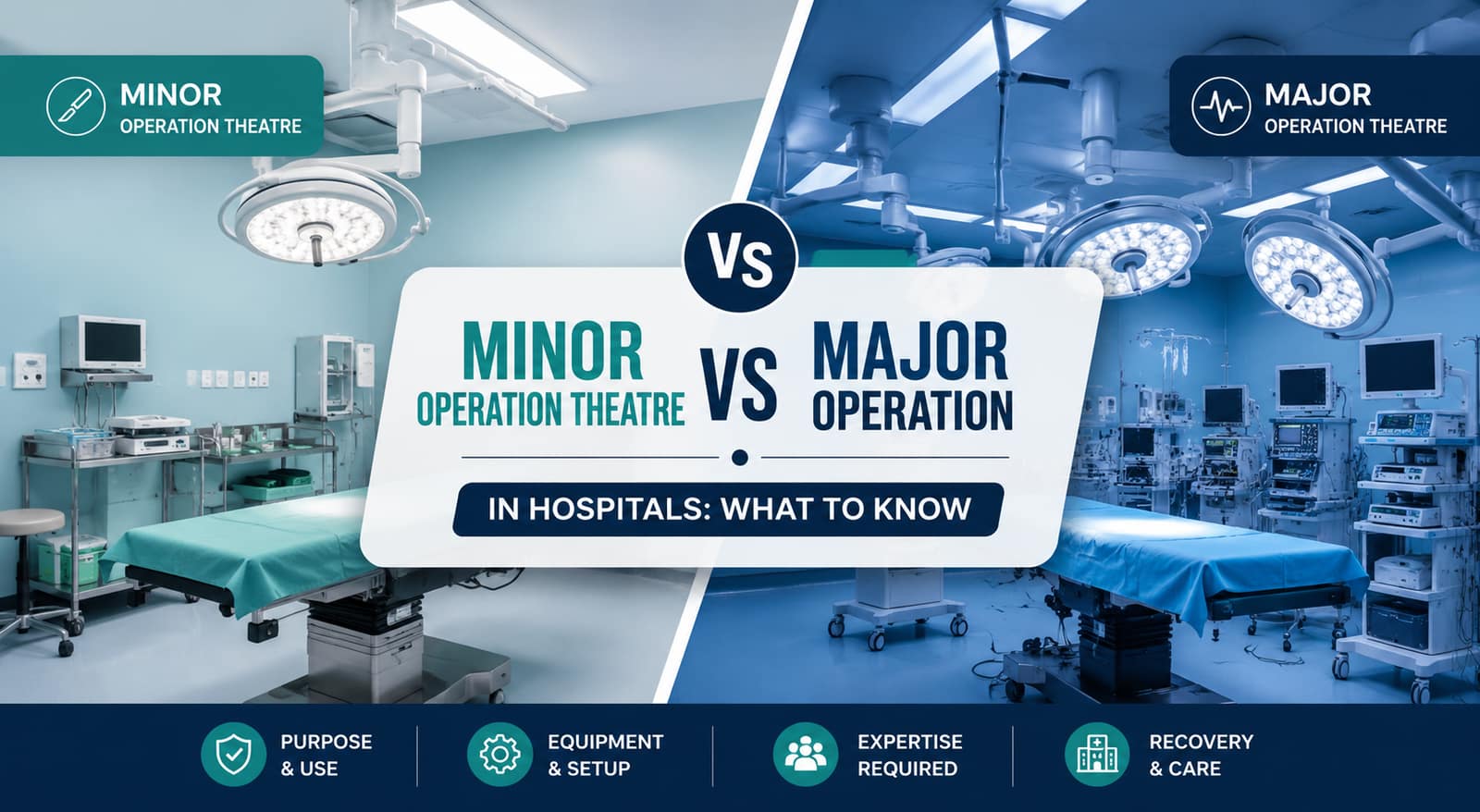
Different types of operation theatres are built within hospitals for varied medical practices. Some surgeries can be done in minimally equipped setups as long as the operation is safe and a sufficiently trained surgical team is available, while others need advanced infrastructure. Patients, caregivers, and healthcare professionals should know that the meaning of a minor operation theatre is different from those used in a major operation.
In this article, we’ll discuss what a minor OT in a hospital means, how it is different from a major operation theatre and why picking the right environment for surgery is important for patient safety and the success of the procedure.
Introduction to Minor Operation Theatre
A minor operation theatre is a specially designed surgical room for procedures that are less complicated, low-risk, and typically involve shorter recovery times. These procedures are usually done with local or regional anesthesia, seldom requiring hospital stays longer than 24 hours.
Typically, a minor OT in a hospital has only the necessary surgical instruments and sterilization systems, lighting, monitoring devices and emergency equipment — everything vital to ensuring patient safety during smaller surgeries.
A Few common procedures that are done in a minor operation theatre include:
- Wound suturing
- Abscess drainage
- Mole or cyst removal
- Skin biopsies
- Nail surgeries
- Small orthopedic procedures
Even though these are called minimally invasive surgeries, they still require some degree of infection control, including a sterile place for surgery.
What Is a Major Operation?
An intensive operation is a complicated surgical procedure that will require major intervention, modern surgery approaches, and experienced medical teams. The latter class of surgeries typically requires general anesthesia, advanced instrumentation, and monitoring before, during, and after the procedure.
You are trained in fully equipped modular operation theatres in your hospital, which are ideal for carrying out a major surgery.
Examples of major operations include:
- Heart surgery
- Brain surgery
- Organ transplantation
- Joint replacement surgery
- Cancer surgery
Minor Operation Theatre Vs Major Operation Theatre: All Key Differences
Both these environments are built to deliver safe surgical care, but they each differ in several critical ways.
Complexity of Procedures
Short Answer: A minor operation theatre is for low-risk, minimally invasive and fast procedures. A major operation theatre, on the other hand, is a process that involves easy-to-complex-level actions requiring detailed preoperative planning and physician operative skills.
Type of Anesthesia
Local/regional anesthesia remains more relevant for most procedures done in the minor OT in the hospital, while patients can stay awake/sub-sedated. An anesthesiologist will typically give you general anesthesia for major surgeries.
Duration of Surgery
Minor procedures take 30 minutes to a few hours, while major operations take a longer time, often several hours depending on the magnitude of the case.
Equipment Requirements
A minor operation theatre includes basic surgical instruments that are required for routine surgery. The major operation theatres comprise various advanced technologies like anesthesia workstations, surgical microscopes, medical gas systems, laminar airflow, integrated imaging systems, and advanced patient monitoring devices.
Recovery Time
Most of the patients undergoing any minor procedure in a short surgical unit are discharged the same day after a 1- to 8-hour observation period. After major surgery, recovery can take days, weeks or months depending on the type of operation.
Read Also This: Zones of Operation Theatre: Hospital’s Key Areas to Understand
Minor OT Less Margin in Hospital
Minor OT in hospital: Minor OT are one of the best ways to ensure proper use of Hospital ot as minor surgeries can be performed here in a hassle-free manner without taking away capacity from major operation theatres, resulting in efficient healthcare services.
Some of the prominent benefits include:
- Faster patient treatment
- Reduced waiting time for surgeries
- Lower healthcare costs
- Efficient use of hospital resources
- Improved patient convenience
Core Components of a Minor Operating Theatre
In a modern minor operation theatre, proper infrastructure should be provided by following safe and sterile procedures.
Key features include:
- Sterile surgical environment
- LED surgical lighting
- Stainless steel furniture
- Sterilization equipment
- Basic anesthesia facilities
How Hospitals Opt to Perform Minor & Major Surgery
Doctors generally look at a few points before deciding if a patient has to be treated in a minor operation theatre or a major operation theatre.
These factors include:
- Nature of the medical condition
- Complexity of the procedure
- Patient’s overall health
- Expected blood loss
The Future of Operation Theatres
The future of operation theatres will be shaped by advanced technology, improving precision, safety, and patient care. Artificial intelligence, robotic-assisted surgery, smart imaging, and real-time monitoring will support surgeons in making accurate decisions. Minimally invasive procedures will reduce recovery time and complications. Automated systems, enhanced sterilization, and digital connectivity will increase efficiency. These innovations will create safer, faster, and more effective surgical environments, benefiting both healthcare professionals and patients worldwide.
Such developments enable higher precision in surgical procedures, greater safety for patients in hospitals and more cost-effective operations. With the growth of medical technology, hospitals are using more sophisticated operation theatres that offer improved clinical outcomes and provide healthcare workers with intelligent surgical infrastructure.
Conclusion
Patients who get treated in a minor operation theatre need to know what is the difference between a major and a minor operation, as both types of surgeries require different types of operations. Major surgeries need advanced facilities, specialized instruments, and multidisciplinary surgical teams, so minor OT in hospitals are ideal only for low-risk Minor OBCs with minimally invasive treatment.