

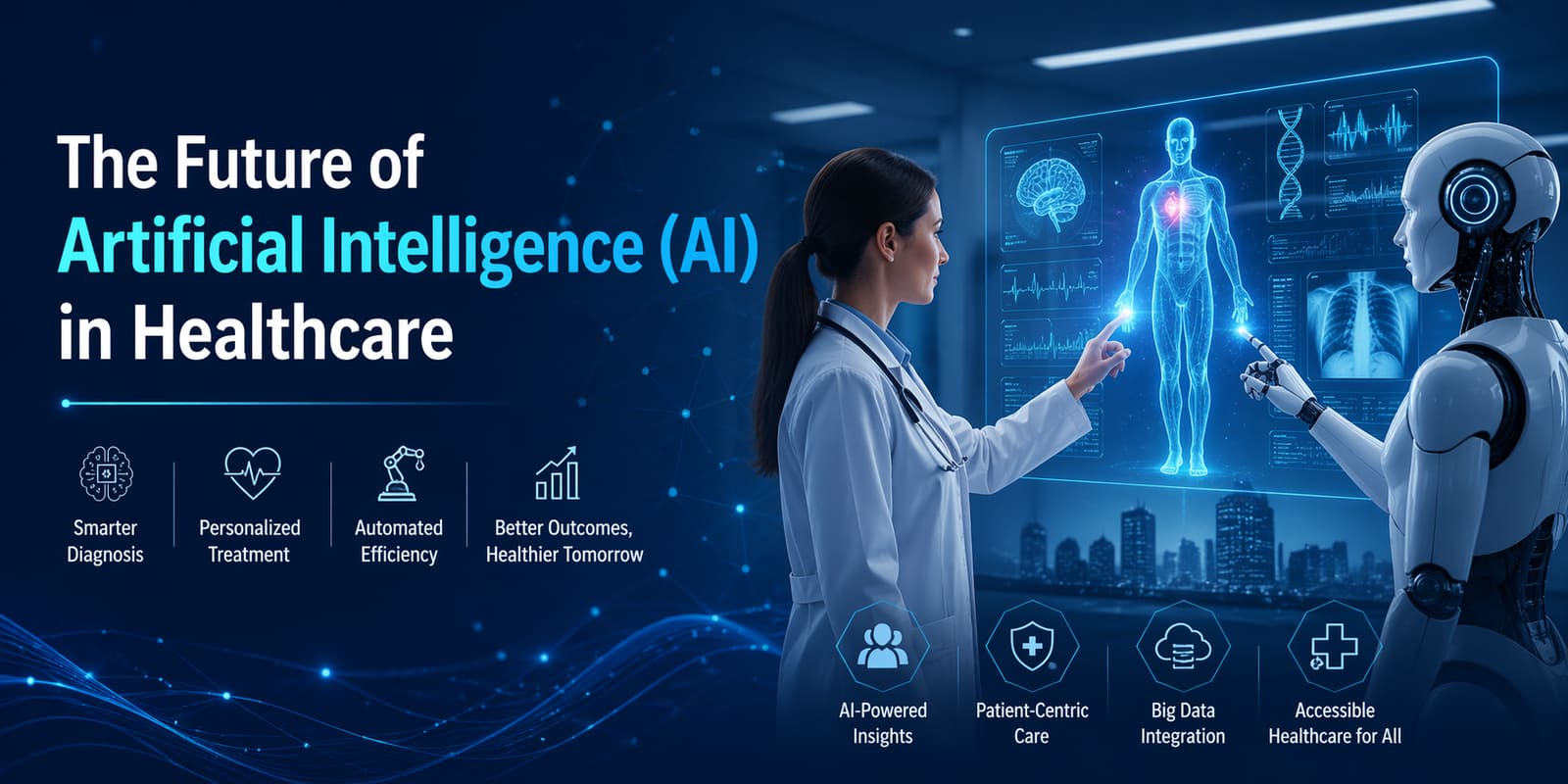
Have you ever thought about whether machines could ever assist or help doctors to save lives? Today, we’re in an era where AI in healthcare is modifying the way hospitals diagnose and treat patients. From data analysis to smart tools, Artificial Intelligence in healthcare is helping doctors make quick and efficient decisions. Moreover, AI in the medical field is now improving the accuracy in tests, and at the same time minimizing the risk of errors.
Additionally, a lot of experts believe that AI in medicine will continue to grow and support doctors in diagnosing patients’ diseases. Moreover, this technology can study a large amount of healthcare-related data in seconds, aiding doctors to make the diagnosis easier and suggest treatments accordingly. Due to this, patients are entitled to receive quicker care, and at the same time, doctors can focus more on patients rather than being stuck in paperwork, creating a better healthcare system overall.
What is Artificial Intelligence in Healthcare?
Artificial intelligence in healthcare basically means making use of smart computer systems in order to help doctors, nurses, and even hospitals in making better decisions. In other words, AI in healthcare enables the machines to learn from the medical data and even support the human experts in diagnosing diseases and planning the treatments accordingly.
Moreover, AI is widely used in clinics, hospitals, and even in research labs in order to improve patient care systems and minimize the chance of errors. Additionally, Artificial intelligence in the medical field basically works by studying larger amounts of healthcare-related information through data analysis.
Read More – Healthcare Industry in India: Market Size, Growth & Trends
Key Applications of AI in Medicine
1. AI in Diagnosis
Well, AI in healthcare is indeed widely used in order to detect diseases quickly, and that too with a high accuracy rate. Furthermore, with the help of radiology and imaging tools, artificial intelligence in healthcare can easily analyze X-rays, scans, and MRIs in just a few seconds. Due to this, human errors get reduced, which in turn aids the doctors in identifying the problems at a much earlier stage. Hence, AI in the medical field helps in improving the diagnosis and saves lives.
2. AI in Treatment Planning
Doctors can easily formulate personalized treatment plans with the help of artificial intelligence in the medical field for their patients. By studying the patient’s history, health data, and AI in medicine, doctors are able to suggest the best possible treatments for them. Moreover, predictive analysis even helps in understanding how a disease may progress. This makes AI in healthcare much more useful for quick, better, and smart decision-making.
3. AI in Drug Discovery
AI in medicine is indeed speeding up the process of discovering new drugs. Honestly, traditional research takes years, but with the help of Artificial Intelligence in healthcare, data can be analyzed in no time, and at the same time, potential solutions can be found. This, in turn, minimizes the time and cost of drug development.
Benefits of AI in Healthcare
There are numerous benefits of AI in healthcare, as follows:
1. Improved Accuracy
AI in healthcare helps in minimizing the errors in diagnosis and treatment. By making an analysis of a large amount of medical data, AI in healthcare can easily detect patterns that might get missed by humans. This results in more precision in tests and reports. And as a result, AI in the medical field improves the patients’ safety and accuracy levels.
2. Faster Decision Making
With the help of AI in medicine, doctors can easily make quick decisions during critical situations. Moreover, AI in the medical field is capable of processing the data in milliseconds and even aids by providing useful insights. This, in turn, saves time during emergency-like situations and even improves the response speed. This is the reason why AI in healthcare plays a crucial role in timely medical care.
3. Cost Reduction
Artificial intelligence in healthcare usually helps in minimizing healthcare costs by automating a lot of tasks. With the help of AI, hospitals can save a lot of money on manual work and even avoid unnecessary tests. Furthermore, AI in the medical field tends to improve efficiency by lowering operational costs. This makes AI in medicine much more beneficial for patients as well as for the doctors.
Read Related – Enhancing Hospital Infrastructure for Better Care
Challenges of Artificial Intelligence in the Medical Field
1. Data Privacy Concerns
Artificial intelligence in healthcare usually depends upon a large amount of patients’ data, which usually raises privacy concerns. Protecting sensitive information regarding health is critically important when making use of AI in healthcare systems. Why? Because there are always risks of data misuse or leaks if the security systems are not robust enough. This is why AI in the medical field must always follow strict data protection rules.
2. Ethical Issues
Well, AI in medicine also brings certain ethical challenges in decision-making and patient care. At times, AI in the medical field may make certain suggestions that are tough to explain clearly. Due to this, certain trust issues may arise between the patients and the doctors. Hence, AI must be used with proper human supervision.
Conclusion
AI in healthcare is actually changing the way medical services are delivered. From quick diagnosis to better treatment planning, Artificial Intelligence in healthcare is actually helping doctors and ultimately improving patient care. Moreover, the usage of AI in medicine is gradually increasing on a day-to-day basis. Moreover, as technology tends to advance, AI will continue to play an even bigger role in saving lives and improving healthcare systems worldwide.