

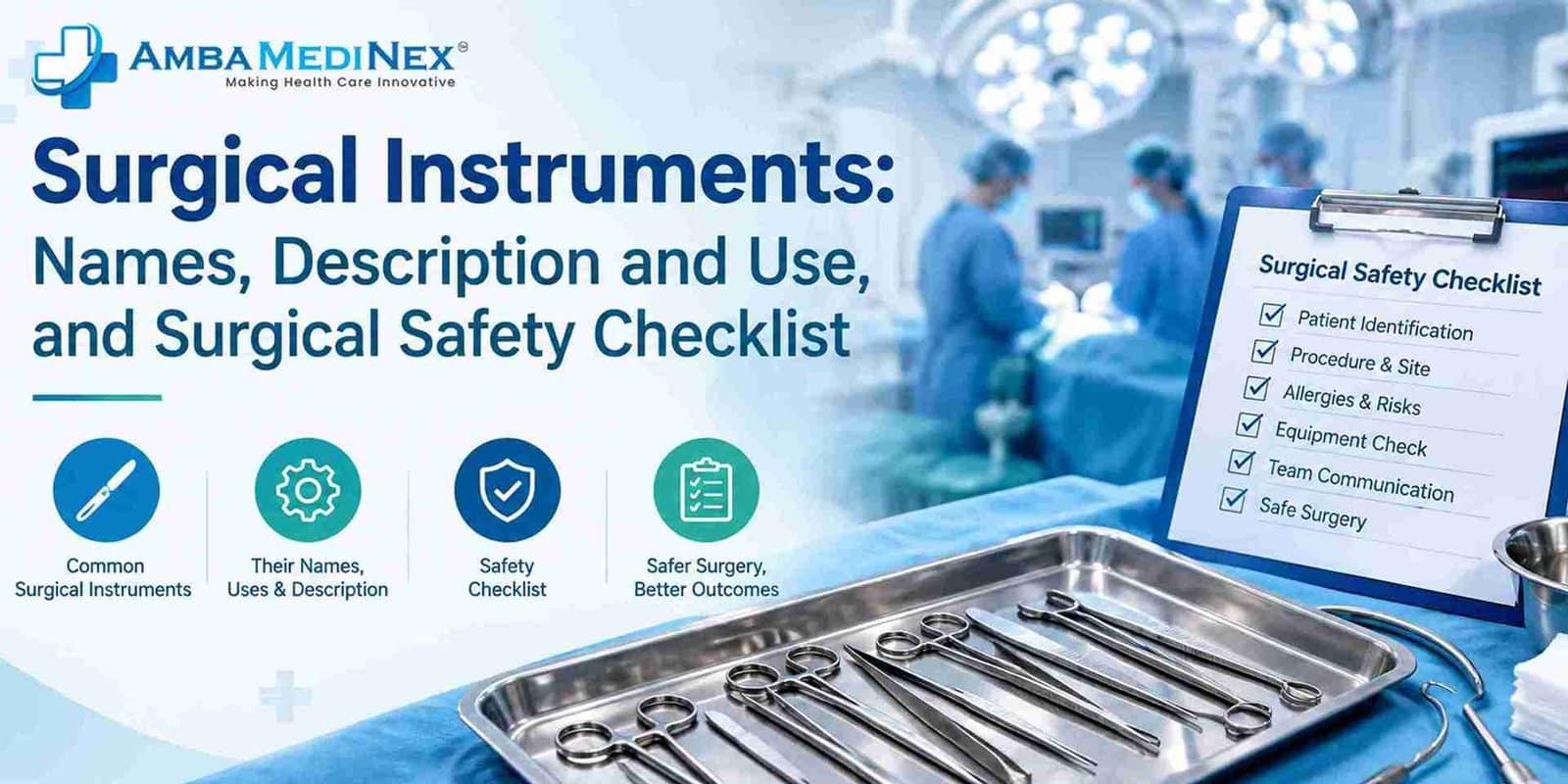
Surgery is one of the most specialised areas in healthcare involving precision, preparation and coordination. In addition to experienced surgeons and well-trained operating-room personnel, a good operation theatre should also have appropriate quantitative surgical instruments. Various instruments are used for different procedural processes, tailored for distinct capabilities like cutting, grasping, clamping, retracting suture or controlling fluid.
Knowing about the common surgical instruments name, their uses and the need of a surgical safety checklist are some ways hospitals can keep their surgical environments organised and efficient.
What Are Surgical Instruments?
Surgical instruments, a special type of medical instrument, are used during surgery to facilitate the performance of surgical tasks. Depending on the purpose and the surgical specialty, they are available in various shapes, sizes and configurations.
The materials that the general surgical instruments are usually made from can endure repeated cleaning and sterilisation processes reliably. But the right material and method all depends on the instrument, and what it will be used for.
This includes some instruments used for general procedures, and others designed specifically for orthopaedic, cardiovascular, ophthalmic, ENT (ear nose and throat), gynaecological, neurological or minimally invasive surgery.
Top 10 Surgical Instruments Name for Nurses with Pictures
Each surgical procedure has many of them—different for different procedures. Some commonly used instruments include:
- Scalpel
A scalpel is a small surgical knife. It is used to make incisions in the skin.
- Surgical Scissors
They are used for cutting tissues, sutures, dressings and different materials. Applications require different designs.
- Forceps
Forceps are an instrument to grasp, hold or manipulate tissues and other materials during procedures.
- Hemostatic Forceps
These devices are applied for clamping of blood vessels or tissues, to control bleeding.
- Retractors
These devices hold tissues and/or organs away from the surgical field in order to provide optimum exposure and access.
- Needle Holder
A needle holder is used to hold a suture needle firmly in place when suturing and allows it to close tissue more easily.
- Suction Cannula
Suction cannula: For suctioning blood, fluids or any other material from the surgical field as needed.
- Surgical Clamps
Holders compress or temporarily occlude tissues, vessels, tubes or other structures with one type of clamp and another with an additional figure.
These include the particular instruments that are necessary to perform a given operation, and for which there may be several possible techniques employed by different surgeons.
Read Related – Quality Indicators in Hospital: A Practical Guide to NABH Standards
Significance of Choosing the Correct Surgical Instruments
Most importantly, the choice of surgical instruments is crucial for an efficient surgical procedure flow. In addition, Hospitals should use instruments suitable for the procedure being performed, maintain them in accordance with required protocols and process them through sterilisation cycles.
The operating team should check whether the necessary instruments and equipment required for any kind of procedure immediately before a procedure is planned. You should also examine instruments for damage, rust, or anything that could obstruct their usage.
Equally important cleaning, sterilisation, storage, and maintenance of reusable surgical instruments.
What Is a Surgical Safety Checklist?
A surgical safety checklist is a communication and verification tool used by the operating team to ensure relevant safety information is confirmed at different steps of a surgical procedure.
The checklists help team members communicate in a consistent manner and give them confirmation on key details, before taking critical actions.
Usually, a popular method divides the checklist into three basic steps.
- Before Anaesthesia
A pre-anaesthesia check-in is performed prior to the initiation of anaesthesia where information including the identity of the patient, planned procedure, surgical site as well as allergies and other relevant anaesthesia considerations are verified by a team.
- Before Skin Incision
Important information – confirming the patient, procedure, surgical site and more – is verified before making the incision. The team can also discuss upcoming essential events and ensure that the needed gear, imaging, and resources are present.
Why is surgical safety checklist important?
Surgery entails many interconnected activities that involve multiple professionals. A checklist structured opportunity for the team to talk and confirm essential information.
An appropriately constructed checklist may provide support for:
- Better communication among surgical staff
- Patient and Procedure Verification
- Correct-site surgery practices
- Identification of potential safety concerns
So a checklist does not substitute professional judgement. Instead, it provides another layer of protection as part of the hospital’s overall surgical procedures.
Surgical Instruments and Patient Safety
Effective Instrument Management is closely related to Operating-room Safety. Instruments must be correctly selected, cleaned, sterilised, stored, inspected and made available as required by the procedure.
In ICUs and the OR, surgical teams also use instrument and sponge counting procedures where appropriate to assist with keeping track of items used during surgery.
Hospitals should have an unambiguous and systematic approach in manipulating, preparing, and storing the instruments. Ensure staff are trained in these procedures.
Role of Hospital Infrastructure
The modern operation theatre has much more equipment than the instruments needed for surgery. They also may require appropriate infrastructure: operating tables and other investigative beds, surgical lights, medical gas systems, ventilation and air-management systems, equipment supports for machines, storage solutions (eg.
It is a must for healthcare organisations to custom the hospital medical equipment list according to each department and surgical speciality.
A few of these include Ambamedinex – Health-related Equipment and Facilities
Ambamedinex is the largest provider for healthcare infrastructure and medical equipment solutions for hospitals, clinics, operation theatres & other Medical facilities. Through appropriate surgical infrastructure planning, healthcare organisations can set up their clinical environment to be organised and functional.
When it comes to a healthcare facility planning for developing an operation theatre (OT), either as a whole or upgrading the existing one, considering equipment and supportive infrastructure is one out of several different associated plans.
Read Related – Medical Imaging Technology: Understanding Scope & Future
Conclusion
The proper surgical tools are vital for conducting different types of surgical operations in an efficient manner. Knowing the names and uses of common surgical instruments can go a long way for healthcare organisations as they will be able to plan their procurement and operating-room needs more effectively.
These measures combined with the efficiency of trained healthcare personnel, correct sterilisation techniques, quality equipment, and planned OT infrastructure help foster a surgical environment based on organisation and safety.
FAQs
What are surgical instruments?
Surgical instruments are surgical tools used by surgeons to perform different surgical tasks during an operation por ex; Cutting, Grasping, Clamping and retracting, Suturing etc.
What are the names of surgical instruments?
Scalpels, scissors, forceps, retractors, needle holders and clamps and suction cannulas are among the most common surgical instruments.
What is a surgical safety checklist?
It is a comprehensive checklist designed to confirm key patient, procedure, equipment and safety details before going ahead with surgery.
How many main steps are in the checklist?
They come before anaesthesia, before skin incision and they are done prior to the patient leaving the OR.
When and how do you care for your surgical instruments?
Reusable instruments are cleaned, checked, sterilized, stored, and maintained as per healthcare protocols.