

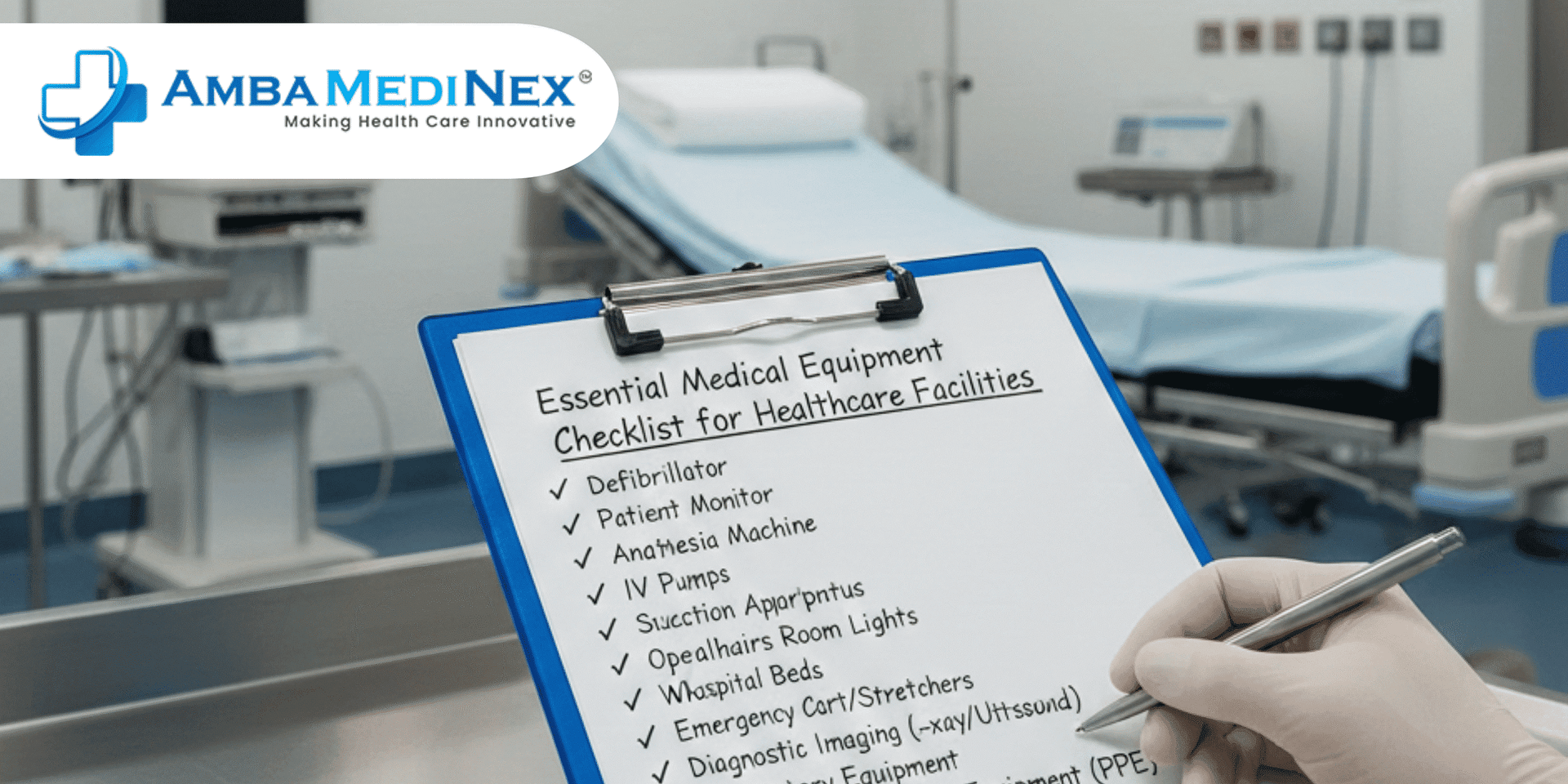
The management of a healthcare facility, whether it’s a hospital diagnostic center, clinic, or nursing home, requires more than just skilled personnel. The foundation of high-quality patient care is having the appropriate tools at the appropriate moment. A well-organized assures smooth operations as well as patient safety and conformity with standards for healthcare.
This blog presents a practical and simple method which every health care facility must consider as well as frequently used medical equipment that aid in the daily routine of medical treatment.
Why a Standard Medical Equipment Checklist Is Important
A well-organized system assists healthcare professionals to avoid shortfalls in supplies, cut down on delay in treatment, and enhance the outcomes of patients.
1. Diagnostic Medical Equipment
An accurate diagnosis is the cornerstone of an effective treatment. Every healthcare institution must invest in diagnostic tools that are essential to the process.
- Digital thermometers
- Monitors for blood pressure
- Stethoscopes
- Pulse Oximeters
- Glucometers
- ECG machines
- Ultrasound and X-ray systems (for the most advanced equipment)
They form the foundation of reliability and are utilized in all departments for emergency and routine evaluations.
2. Patient Monitoring Systems
Continuous monitoring aids doctors in tracking the health of patients and react rapidly in the event of any change.
- Multi-parameter patient monitors
- Heart rate monitors
- Oxygen saturation monitors
- Fetal monitors (for the care of a pregnant woman)
Including monitoring tools increases the safety of patients, particularly in ICUs and other emergency units.
3. Surgical and Procedure Equipment
Even small clinics can perform small procedures that require reliable and sterile instruments.
- Tables for a surgical procedure
- Operating lights
- Autoclaves to sterilize
- Instrument trolleys
- Sets of surgical instruments
- Suction machines
It must be accompanied by sterilization tools in order to ensure that there are no infections and to keep hygiene standards in check.
4. Emergency and Life-Saving Equipment
The importance of emergency preparedness is not negotiable in the healthcare setting. Facilities should be prepared with the ability to deal with emergencies quickly.
- Defibrillators
- Emergency crash carts
- Ventilators
- Concentrators and oxygen cylinders
- Ambu bags
- Emergency suction units
These are essential items particularly for trauma centers and hospitals.
5. Hospital Furniture and Patient Care Equipment
Accessibility and comfort play an important role in the recovery of patients.
- Beds in hospitals (manual or electric)
- Bedside lockers
- Overbed tables
- Wheelchairs
- Stretchers
- Patient transfer trolleys
Although often overlooked, furniture is an important component of a complete .
6. Consumables and Daily-Use Medical Items
Consumables are consumed in huge quantities and need to be replenished frequently.
- Masks and gloves
- Needles and syringes
- IV sets
- Gauze and bandages
- Catheters
- Antiseptics and disinfectants
Having a sufficient supply of consumables will ensure continuous medical care and control of infections.
7. Laboratory and Testing Equipment
For accurate test results, reliable lab equipment is essential.
- Microscopes
- Centrifuges
- Blood analyzers
- Sample storage refrigerators
- Lab consumables and test tubes
Laboratory equipment is an essential component of a complete diagnostic centre as well as hospitals.
Read Related – Operation Theatre Equipment
Final Thoughts
The well-organized, detailed and regularly updated is vital to providing safe, efficient and top-quality healthcare services. Regularly audits, timely upgrades and regular maintenance helps health facilities to remain ready for the day-to-day demands of healthcare and emergency situations. The right medical equipment doesn’t just increase patient confidence but also enhances the whole health system.